
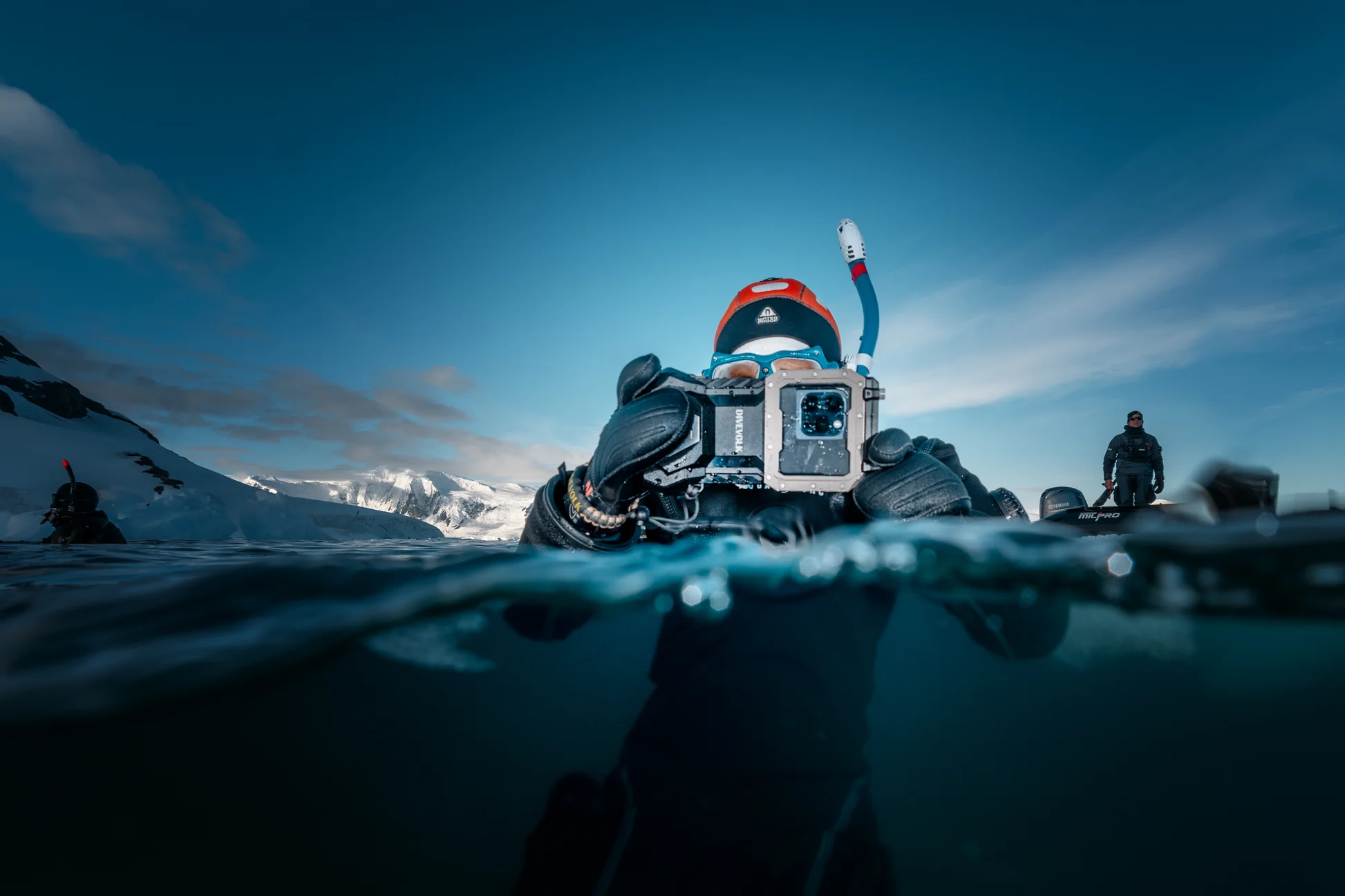
Underwater camera housings range from $50 iPhone cases to $3,000+ professional rigs. What you need depends on how deep you're going, what camera you're shooting with, and how serious you are about underwater photography.
Best for casual snorkeling, shallow dives (up to 10m), and travel convenience.
SeaLife SportDiver ($150) is rated to 40m and includes color correction filters with full touchscreen control. Best all-around option for serious snorkeling. ProShot ($200) goes to 100m and works with external lights, better ergonomics but overkill for most. Kraken Smart Housing ($120) is the budget pick, rated to 40m with filter compatibility.
iPhone housings work for documenting trips and casual content, but low-light performance and zoom limitations mean you're not getting professional results. That's fine for most people.
Best for action shots, first-person perspective, and ease of use.
GoPros are waterproof to 10m out of the box, but for deeper dives you'll want aftermarket housings. The Dive Housing by GoPro ($50) is rated to 60m and reliable. Backscatter FLIP ($130) adds flip filters for color correction and makes footage look significantly better without editing.
Best for better image quality than phones, still portable, great for travel.
Sony RX100 VII with Nauticam Housing ($1,800 total) offers excellent low-light performance and fast autofocus with a 1-inch sensor. Nauticam is the gold standard for build quality. Canon G7X III with Fantasea Housing ($1,200 total) is a solid all-arounder, good for video and stills. Fantasea is more affordable than Nauticam but still well-built.
Best for professional quality, full manual control, serious underwater photography.
These are investments. Budget $2,000-$5,000+ for camera, housing, ports, and strobes.
Sony A7S III with Nauticam Housing ($5,000+ total) is best for low-light video with incredible dynamic range and reliable autofocus. Canon R5 with Ikelite Housing ($4,500+ total) excels at stills with its 45MP sensor. Ikelite housings are more affordable than Nauticam without sacrificing too much quality. Olympus OM-1 with Olympus Housing ($3,500+ total) is a smaller system, easier to travel with. Micro Four Thirds sensor limits low-light performance but excels in good conditions.
Depth rating matters. If you're snorkeling or freediving (0-20m), most housings work. For scuba (20-40m), check ratings carefully. Technical diving (40m+) requires professional-grade housings.
Ergonomics can make or break your shoot. Can you access critical controls while wearing gloves? Are buttons clearly labeled? Housings with poor ergonomics ruin shoots.
Port compatibility is key since wide-angle vs macro requires different ports. Budget for multiple ports if you're shooting varied subjects.
Strobe mounts are essential for serious work. Make sure your housing supports dual strobes via fiber optic or electrical sync.
Under $200: Get an iPhone housing (SeaLife SportDiver) or stick with a GoPro.
$1,000-$2,000: Compact camera plus housing (Sony RX100 VII with Nauticam).
$3,000+: Mirrorless system with housing and strobes (Sony A7S III or Canon R5 setup).
Start with what you have. Shoot your iPhone in a housing for a season before dropping $5,000 on a professional rig. Most people don't need mirrorless—they need practice and better composition skills.
If you're serious about underwater work, invest once in a quality housing and maintain it properly. Cheap housings fail. Expensive ones last decades.
.png)


.svg)