
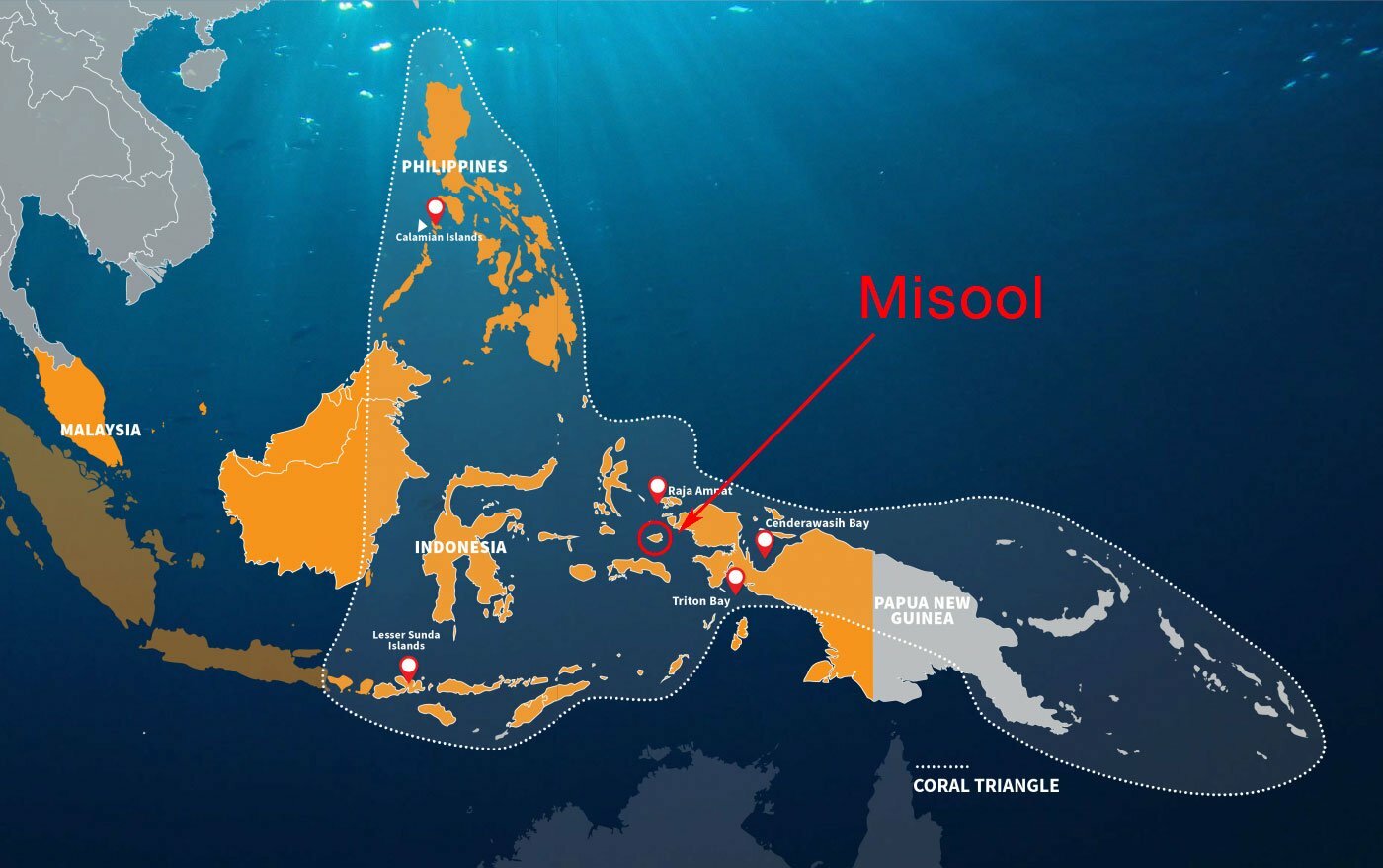
The Coral Triangle is a roughly triangular region of the tropical Pacific Ocean that covers parts of Indonesia, the Philippines, Malaysia, Papua New Guinea, the Solomon Islands, and Timor-Leste. It's the most biodiverse marine ecosystem on earth, and Raja Ampat sits at its epicenter.
The Coral Triangle covers 5.7 million square kilometers of ocean. Within that area, researchers have identified over 600 species of reef-building coral, more than 2,000 species of reef fish, and six of the world's seven species of sea turtle. The Coral Triangle contains roughly 75% of all known coral species in the world. By comparison, the Great Barrier Reef, itself one of the most celebrated ecosystems on earth, has around 400 coral species. Raja Ampat alone has documented over 1,500 fish species and 600 coral species, making it the most biodiverse single location in the entire Coral Triangle.
The extraordinary biodiversity of the Coral Triangle is the result of geography, oceanography, and time. The region sits at the convergence of the Pacific and Indian Oceans, which means currents from both systems flow through it, bringing nutrients and larvae from both directions. The complex island geography creates an enormous variety of habitat types within a relatively small area: deep channels, sheltered bays, exposed oceanic reefs, mangroves, and seagrass beds. Each habitat supports different species, and their proximity means that species interact and compete in ways that drive further diversification over evolutionary timescales.
More than 120 million people in the Coral Triangle region depend on marine resources for food security and income. The reef systems provide coastal protection from storms and waves. The fisheries that operate within the Coral Triangle supply a significant portion of the world's seafood. When coral dies, the knock-on effects include reduced fish populations, increased coastal erosion, and direct economic harm to communities that have no alternative food sources. Protecting the Coral Triangle isn't just an environmental priority. It's a human one.
The Coral Triangle faces pressure from climate change, overfishing, destructive fishing practices including blast fishing and cyanide fishing, coastal development, and plastic pollution. Ocean warming events have caused significant bleaching in parts of the region. The pace of change is faster than reef recovery cycles, which means some areas that were pristine 20 years ago are significantly degraded today. Raja Ampat has been relatively protected by its remoteness and strong local conservation programs, but it's not immune.
Well-managed dive tourism in the Coral Triangle creates economic incentive to protect reefs rather than exploit them. Communities that earn income from tourism are less dependent on destructive fishing practices. The Raja Ampat conservation area, established in partnership with local government and international organizations, has seen measurable recovery in fish populations and coral coverage in protected zones since it was established. Tourism funding contributes directly to ranger patrols, research, and community education programs.
.png)


.svg)