
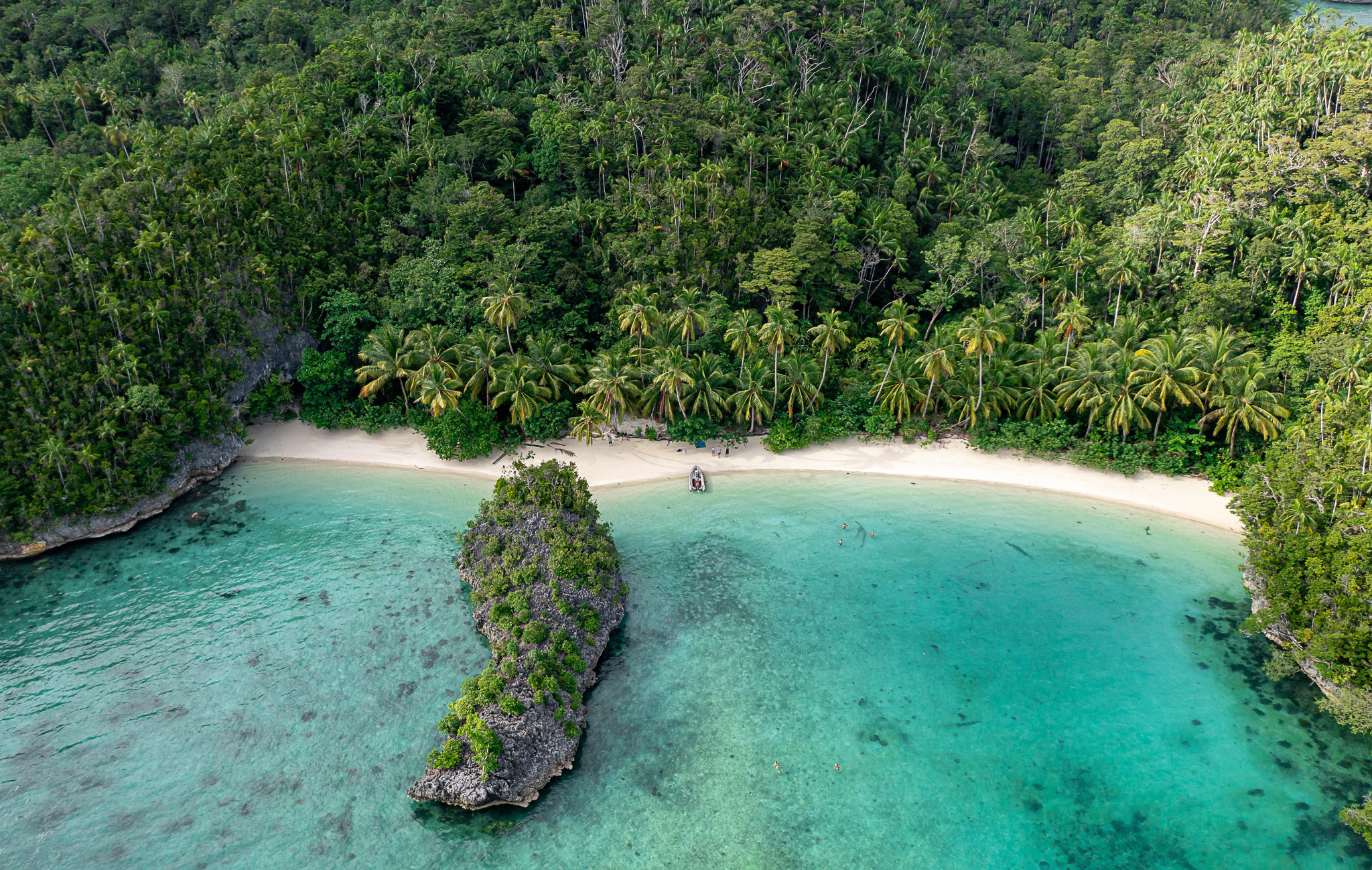
A Raja Ampat liveaboard is one of the best diving experiences in the world, and it's more accessible to beginners than most people assume. Here's what to expect if it's your first time on a liveaboard, and why Raja Ampat is a great place to do it.
A liveaboard is a dive boat you live on for the duration of the trip. You sleep there, eat there, and dive directly from the boat. There's no commuting from a hotel to a dive site. You wake up at the dive site. You finish your last dive and go to bed at the dive site. Everything is organized around being in the water.
In Raja Ampat, liveaboards are the only practical way to access the region's best dive sites, which are spread across thousands of islands over a vast area. Some of the most biodiverse reefs in the world are only reachable by multi-day boat travel. Day trips from the few land-based resorts in the area don't get you there.
Raja Ampat liveaboards range from basic to genuinely comfortable. Most mid-range and premium operators use traditional Indonesian pinisi sailing ships, which are wooden vessels with comfortable cabins, air conditioning, and surprisingly good food prepared fresh each day. Cabins are compact but functional. You have a bed, storage for your gear, and a private or shared bathroom depending on the vessel. You spend most of your waking hours on deck or in the water, so cabin size matters less than it sounds.
The deck is where life happens on a liveaboard: briefings before dives, meals served outside when weather allows, and long evenings watching the sun set behind limestone karst islands with a cold drink in hand.
Most Raja Ampat liveaboards require a minimum of an Open Water certification and a log of at least 20-30 dives. Some of the more challenging dive sites, including strong current dives, require an Advanced certification. If you have an Open Water cert and a modest dive log, the beginner-friendly sites in Raja Ampat are some of the most spectacular on earth. You don't need to be an advanced diver to have an extraordinary experience here.
If you don't have a certification, some operators offer the option to learn to dive onboard under the supervision of a dive instructor. This is a legitimate way to experience Raja Ampat if you're committed and comfortable in the water.
Raja Ampat sits at the center of the Coral Triangle, the most biodiverse marine ecosystem on earth. On a single dive you might encounter reef sharks, mantas at cleaning stations, schools of fish so dense they block the light, pygmy seahorses smaller than a fingernail, and coral formations that cover every available surface. The biodiversity here is genuinely unlike anywhere else. Experienced divers who've been diving for decades regularly call it the best diving of their lives.
Flying into Sorong in West Papua is the entry point for Raja Ampat. From Europe, this typically means flying via Kuala Lumpur, Singapore, or Jakarta, with a final hop to Sorong. Total travel time is 20-28 hours. Liveaboards depart from Sorong harbour. Raja Ampat has an entry fee that contributes to reef conservation, currently around USD 65 per person. Your operator will usually arrange this. The best season is October through April, when visibility is clearest and seas are calmest.
.png)


.svg)