
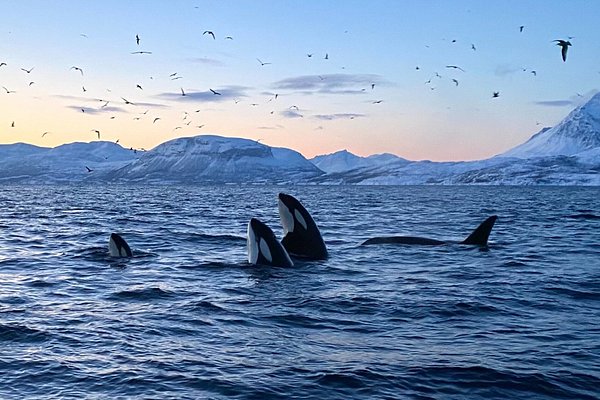
Skjervøy is not a destination most travelers have heard of. It's a small island municipality about 90 kilometers north of Tromso, accessible by a 20-minute flight or a two-hour drive. In November and December, it becomes one of the most extraordinary wildlife destinations in the world.
Each autumn, large schools of Norwegian spring-spawning herring migrate to sheltered fjords along the northern Norwegian coastline to overwinter. Orcas follow. In some years, several hundred orcas concentrate in a relatively small area around the Kvænangen fjord system near Skjervøy, feeding on herring using a technique called carousel feeding, where they herd fish into tight balls near the surface before stunning them with tail slaps.
This concentration of orcas in accessible fjord water, combined with the ability to put swimmers in the water with them under the right conditions, makes the Skjervøy area one of the only places in the world where this kind of encounter is possible. Tromso offers similar access but is more developed and more crowded. Skjervøy is quieter, the orca density in peak years is often higher, and the wilderness feel is more intact.
The nearest airport is Tromso (TOS), with direct connections from Oslo and several other Norwegian cities. Skjervøy is then reached by either a short flight to Skjervøy airport (not always available) or by driving the E6 north and crossing via the Kvalsund ferry or bridge. The landscape on the drive is spectacular, particularly in winter with snow on the mountains. Most expedition operators arrange transfers from Tromso, which simplifies the logistics considerably.
Late October through January is the orca window, with November and December typically being the most reliable months. The herring arrive first, followed by the orcas within days or weeks. Exactly when and in what concentration varies year to year based on where the herring are. Good operators track this in real time and position themselves accordingly.
This is also aurora borealis season. The darkness at this latitude in November is nearly total, with around 4-5 hours of daylight, and clear nights can produce spectacular northern lights displays. Many visitors combine the orca expedition with deliberate aurora hunting in the evenings.
Days on the expedition start early, before first light, to maximize the daylight window. Guests are fitted with drysuits before boarding the boat. Drysuits keep you dry and insulated in 4-6 degree water and are significantly warmer than a wetsuit in these conditions. Your instructor brief you on drysuit use and entries before the first water session.
In-water encounters happen when the guide has assessed orca behavior and conditions as appropriate. You enter the water as a small group, move slowly toward the animals, and hover at the surface. The goal is to be in the water with orcas while they're feeding, which means surrounded by activity: herring balls near the surface, orcas circling and striking, sometimes humpback whales joining the edges. It is, by most accounts of people who've done it, the most intense wildlife experience of their lives.
Skjervøy itself is a functional fishing village with basic amenities and genuine character. Accommodation is comfortable rather than luxurious, and the evening culture involves good food, early nights, and the kind of conversation that forms between people who've shared something unusual. The local population is used to wildlife enthusiasts descending in winter and is generally welcoming.
.png)


.svg)