
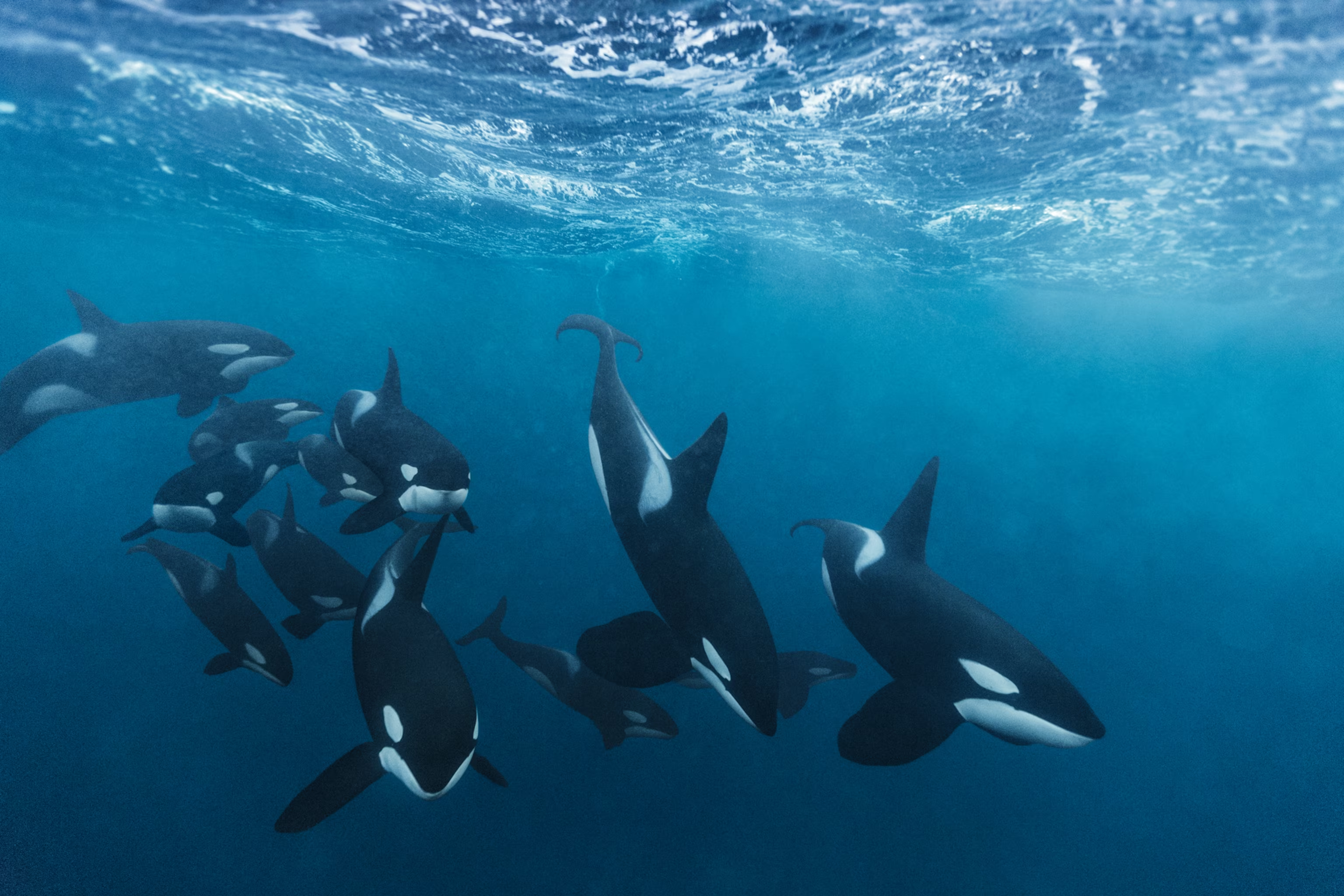
Carousel feeding is the collective hunting behavior that draws wildlife enthusiasts to the fjords of northern Norway every winter. It's one of the most cooperative and strategically complex hunting techniques in the animal kingdom, and when you're in the water watching it happen, it's almost impossible to believe.
Herring are fast and agile, and when threatened, they ball up, packing together tightly as a defensive response. This makes each fish harder to catch individually. But collectively, it creates exactly the trap orcas need.
A pod of orcas surrounds a school of herring and begins swimming in coordinated circles, gradually tightening the formation. Some pod members swim below the school to prevent downward escape. Others work the edges, using their white belly patches, which researchers believe act as visual signals, to confuse and direct the fish. The herring ball becomes tighter and tighter, driven toward the surface, until it's a dense, disoriented mass just below the waterline.
Then comes the tail slap. One orca wheels around and delivers a powerful strike with its tail fluke, stunning or killing multiple fish simultaneously. The other orcas move in and feed. The whole sequence from herring ball to tail slap takes seconds once it's in motion, but the buildup can take 10 to 20 minutes of precise coordination.
No single orca can perform carousel feeding alone. The technique requires multiple animals playing specific roles simultaneously: chasers, flankers, deep blockers, and the final striker. Pod members seem to have established roles, and younger orcas learn by watching and participating from an early age. This isn't instinct, it's learned cultural behavior transmitted between generations. Different orca populations around the world have completely different hunting techniques. What you see in Norway has developed over decades within specific social groups.
Orcas use echolocation throughout the hunt, clicking and listening to the returning signals to map the position, density, and movement of the herring school in real time. When you're in the water during a carousel event, you can hear this as a series of clicks and higher-pitched sounds. Some researchers believe the intensity of echolocation bursts near the herring ball may also contribute to disorienting the fish.
From a boat, carousel feeding looks like a patch of disturbed water with fins cutting circles, punctuated by explosive tail slaps that spray water meters into the air. From in the water, which is possible during guided expeditions in Skjervoy, it looks like controlled chaos. The herring are silver and fast, the orcas are enormous and deliberate, and the whole thing happens faster than your brain can fully process. Most people describe the experience as a combination of sensory overload and complete stillness.
Carousel feeding events in Norway regularly attract humpback whales, which follow orca pods to opportunistically feed on stunned or scattered herring at the edges. This makes November in the Norwegian fjords one of the few places on earth where you can watch orcas and humpback whales feeding in proximity, sometimes within meters of each other and of the boat.
.png)


.svg)