
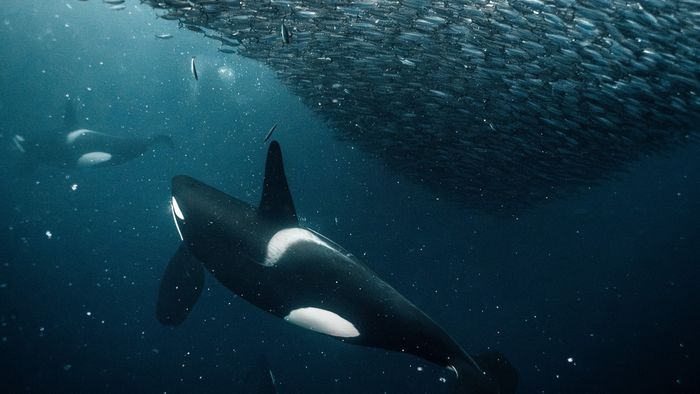
Orcas visit Norway's northern fjords from October through January, following the massive herring migration. This is when hundreds of orcas and humpback whales converge on Skjervøy, Tromsø, and surrounding areas for one of the ocean's most concentrated feeding events.
The best time to see orcas in Norway is mid-November through mid-December. By this point, herring schools are densely packed in the fjords, and orca activity is at its highest.
Water temperatures drop to 4-6°C, visibility improves, and pod behavior becomes more predictable as they settle into hunting patterns. You'll see carousel feeding—multiple orcas working together to corral and stun fish with tail slaps—almost daily during this window.
October is when orcas first arrive. Herring are still migrating in, so orca sightings are less consistent. Some days you'll find active pods, other days you won't. Tour operators are just beginning operations, and weather can be unpredictable.
If you're flexible with dates and want fewer tourists, October works. Just know you're gambling on whether the herring—and therefore the orcas—have arrived in force.
By January, herring start moving offshore, and orcas follow. Sightings become less frequent, and finding active pods requires longer boat trips into deeper waters. Weather worsens, with shorter daylight hours and rougher seas.
January isn't ideal unless you're combining it with other Arctic experiences like northern lights or winter landscapes. For dedicated orca encounters, stick to November-December.
Skjervøy is the primary hub. It's a small fishing village about 3 hours north of Tromsø, positioned perfectly where herring funnel into narrow fjords. Most tour operators base out of here during orca season.
Tromsø works as a backup location, though it's farther from the herring grounds. You'll spend more time on the boat getting to orcas, but the city offers better amenities and easier flight connections.
Lofoten Islands occasionally see orcas, but it's not reliable. If you're visiting Lofoten, treat any orca sighting as a bonus, not the main event.
You'll be on the water for 6-8 hours per day, searching for herring schools and the orcas that follow. When you find them, guides assess whether conditions allow in-water encounters. If yes, you slip into drysuits and enter the water in small groups.
Once in, you float passively, letting orcas decide whether to approach. Sometimes they're curious. Sometimes they ignore you completely. Both are normal.
Water is cold. Visibility varies. Some days you'll have multiple encounters. Other days you'll watch from the boat. That's wildlife—it doesn't perform on demand.
November-December gives you about 4-6 hours of usable daylight. Sun rises around 9-10am and sets by 2-3pm. The rest is twilight or darkness. Northern lights are common, but you're here for orcas, not auroras.
Weather is harsh. Expect wind, occasional snow, and temperatures ranging from -5°C to 5°C. Dress in layers, bring waterproof gear, and accept that some days will be too rough to go out.
Book at least 3-6 months in advance. Reputable operators limit group sizes and fill up quickly. Fly into Tromsø (TOS) and arrange transfers to Skjervøy—either by car (3-4 hours) or ferry.
Most expeditions run 5-7 days. Shorter trips risk missing encounters due to weather or orca movement. Longer trips increase your odds of multiple in-water experiences.
.png)


.svg)