
You'll be in a drysuit. Not a wetsuit—a drysuit. The difference matters.
A drysuit keeps water out entirely. You stay dry inside while the suit seals at your wrists, neck, and ankles. Water temperature in November hovers around 4-6°C, and while the drysuit prevents hypothermia, you still feel cold on your exposed face and hands.
Wear wool or synthetic thermal base layers—something that insulates even when damp from sweat. Thick wool socks help. If you get cold easily, double up on layers. Your hands and face will be the coldest parts, so bringing neoprene gloves (5-7mm) makes a big difference.
Tour operators provide drysuits, but check if they include undergarments. Some do, some don't. Ask before you go.
You don't need to be an Olympic swimmer, but you do need basic water confidence and moderate fitness.
Swimming ability: You should be comfortable in open water, able to swim at least 200 meters without stopping. You'll be wearing fins which help, but ocean swimming is different from pool swimming. Currents, waves, cold—it all adds up.
Stamina: You're spending hours on boats in cold conditions, getting in and out of drysuits multiple times. It's physically tiring even when you're not actively swimming. Days start early and run long.
Freediving practice helps but isn't required. Most encounters happen at the surface. If you want to duck dive to watch orcas hunt below you, basic freediving skills improve the experience, but you can have incredible encounters just floating and observing.
This is the most important section. How you behave determines whether you have a good encounter or ruin it for everyone.
Stay calm. When orcas appear, your instinct might be to swim toward them. Don't. They're fast—up to 33 mph—and you can't keep up. Chasing them just makes them leave.
Float passively. Lie still on the surface, breathe through your snorkel, and let them decide whether to approach. Often they will out of curiosity, especially younger orcas. Sometimes they're busy hunting and ignore you completely. Both are normal.
Maintain distance. Guidelines suggest staying at least 30 meters away unless the orca approaches you. If an orca swims toward you, don't reach out to touch it. Keep your hands to yourself. These are wild predators, not pets.
Move slowly and deliberately. No splashing, no sudden movements. When you need to reposition, use smooth, controlled fin kicks. Erratic movement can startle them or signal that you're stressed.
Don't separate mothers and calves. If you see a calf with an adult, give them extra space. Never swim between them. Protective instincts are strong, and you don't want to test that.
Listen to your guides. They know orca behavior, they know these specific pods, and they know when conditions are right for entering the water. If they say stay on the boat, there's a reason.
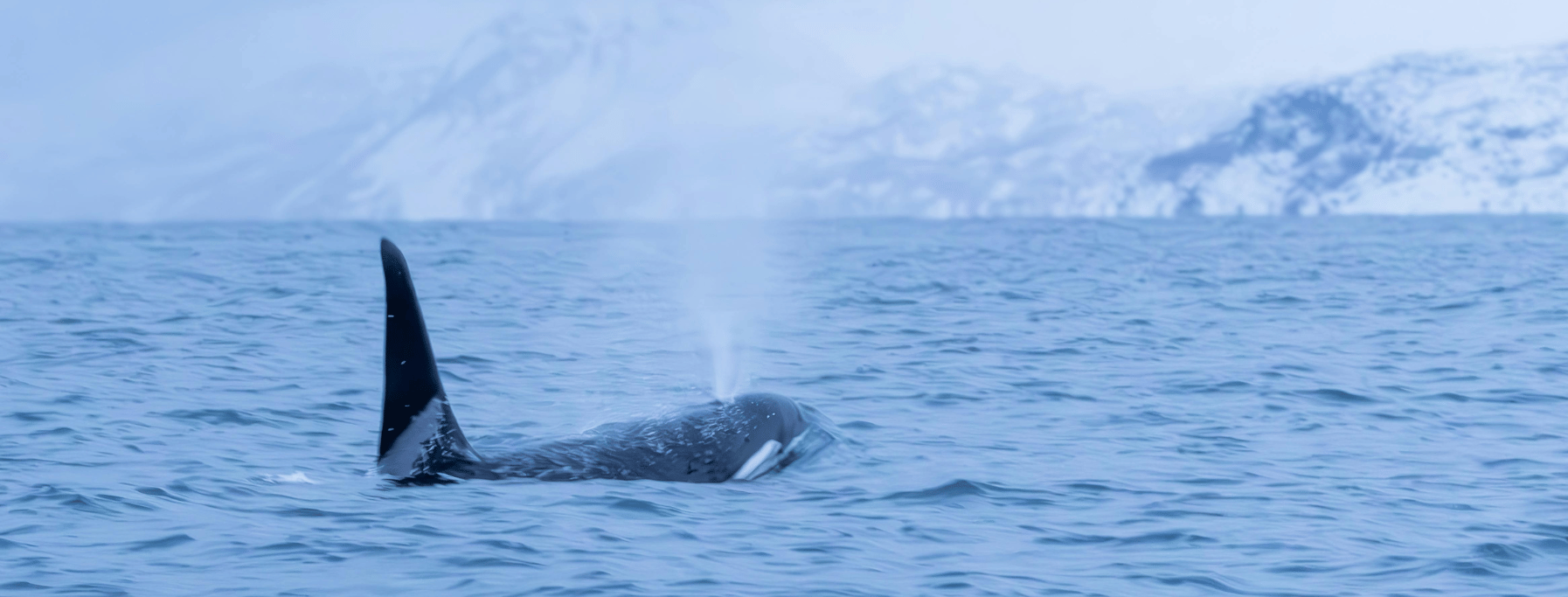
Orcas in Norway are here for herring, not humans. They're hunting, feeding, socializing. You're background noise.
When they're carousel feeding—circling herring into tight balls and stunning fish with tail slaps—they're focused and coordinated. You might see multiple orcas working together, taking turns feeding. It's efficient, methodical, impressive to watch.
Sometimes they'll spy-hop (stick their heads above water to look around) or breach (jump). These behaviors aren't for your entertainment—they serve specific purposes in hunting and communication. You're just lucky enough to witness them.
Orcas use echolocation. They know exactly where you are in the water. If they wanted to interact with you, they would. Most of the time, they don't care.
Orcas don't attack humans in the wild. There are no recorded fatalities. But they're still apex predators weighing up to 6 tons. Respect that.
The real risks are:
Boats should have ladders for quick exits and experienced crew monitoring conditions. If you feel uncomfortable at any point, signal for help. No one will judge you for getting out early.
Underwater cameras work in Arctic water, but results vary.
GoPros are popular because they're simple, waterproof to depth, and handle low light better than you'd expect. Mount one to your mask or hold it in your hand. Just accept that you'll miss shots while fumbling with it.
For serious photography, mirrorless cameras in housings give you control over settings. But operating them in neoprene gloves while floating in current is challenging. Practice beforehand.
Light is limited. November gives you 4-6 hours of usable daylight. Water clarity helps, but you're still shooting in dim conditions. Increase ISO, shoot wide, and take way more footage than you think you need.
Consider not photographing at all. Sometimes being present—watching, listening, experiencing—matters more than capturing content. You can't get those moments back if you spend them staring at a screen.
Swimming with orcas is intense. You're cold, you're in open ocean, and you're near animals that could easily harm you if they wanted to.
Some people freeze up. That's normal. The first time you're in the water with a pod, adrenaline hits hard. Your breathing might speed up, your hands might shake. Acknowledge it, control your breathing, and remember that guides are nearby.
Encounters are unpredictable. Sometimes orcas come within meters. Sometimes they stay distant. Sometimes you wait hours for a brief sighting. Managing expectations helps.
It's okay to be nervous. In fact, healthy fear keeps you respectful and cautious. Orcas deserve that respect.
Not all tour companies operate the same way.
Look for operators who:
Avoid operators who:
Price often correlates with quality. If a trip seems unusually cheap, ask why.
Beyond the drysuit layers:
When we finalize our Northern Norway expeditions, safety and animal welfare will be non-negotiable. Small groups, experienced local guides, flexible schedules that prioritize orca behavior over human convenience.
We'll focus on in-water encounters rather than just observation, but only when conditions and orca behavior allow it. If that means fewer people get in the water or some days we watch from the boat, that's how it goes.
The goal isn't to guarantee everyone gets the perfect Instagram moment. The goal is respectful, meaningful encounters that leave both humans and orcas better off than before.
Swimming with orcas requires preparation, respect, and realistic expectations. It's cold, challenging, and unpredictable. It's also one of the most powerful wildlife experiences you can have.
Prepare properly. Respect the animals. Listen to guides. Stay calm. And when that moment comes—floating in Arctic water while a pod of orcas hunts beneath you—you'll understand why people do this.
At Maui, we believe the best travel stories start with the people you meet, not just the places you go. Join us, and become part of something bigger than just another trip.
📩 Questions? Reach out at info@mauitravel.io – we'd love to hear from you.
.png)


.svg)