
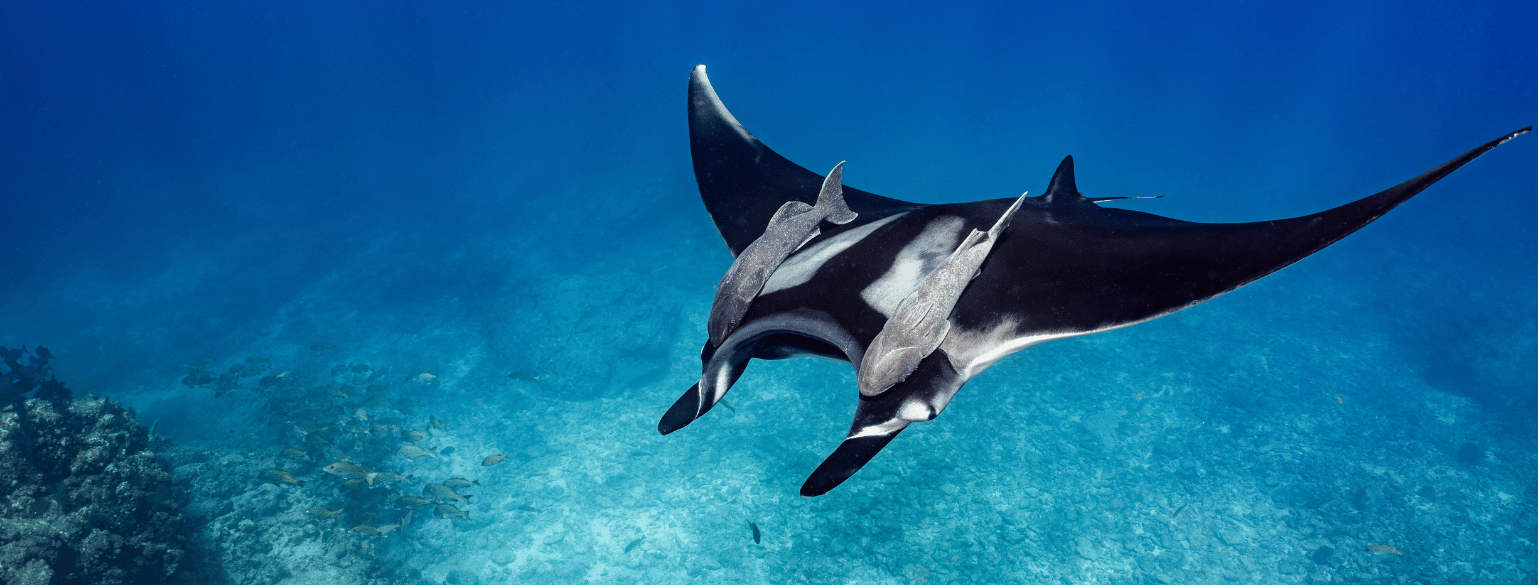
Planning to swim with manta rays in the Maldives but not sure when to go? This guide breaks down the seasons, explains why timing matters, and helps you understand where to find these gentle giants throughout the year. We'll cover what actually affects manta sightings and which months give you the best chance for encounters.
Watching a manta ray glide past underwater changes something in you. The grace, the size, the way they move—it's different from anything else you'll see in the ocean.
But manta rays don't stay in one place. They follow food, which means they follow currents and plankton. Understanding this makes the difference between swimming with dozens of mantas and not seeing any.
The Maldives has two monsoon seasons that determine everything about where marine life gathers.
Southwest Monsoon (May-November):Winds blow from the southwest. Currents push plankton toward the eastern sides of atolls. Water is slightly rougher, occasional rain, but this is when massive manta aggregations happen in certain locations.
Northeast Monsoon (December-April):Winds reverse direction. Currents flow from east to west. Better overall visibility and calmer seas across most of the Maldives. Mantas shift to western sides of atolls following the plankton.
This isn't complicated—mantas go where the food is. Food concentrates where currents push it. Currents change with the monsoons.
If you want the highest concentration of manta rays in the Maldives, plan for July through October. This is when the southwest monsoon creates perfect conditions for plankton blooms, and mantas gather in impressive numbers.
What makes this period special:
Plankton-rich waters get pushed into specific bays and channels. Mantas congregate at feeding sites, sometimes hundreds at a time. You're not searching for individual mantas—you're watching feeding frenzies.
The water carries more plankton during this season, which affects visibility slightly. It's not crystal-clear blue like the northeast monsoon, but visibility is still typically 25+ meters. And the trade-off is worth it—you're here for the mantas, not the visibility.
We run our Maldives expeditions during this peak season because it offers the most reliable manta encounters. Our trips are timed specifically for July through October when conditions in South Ari Atoll are ideal.
South Ari Atoll, where we operate, is one of the few places in the Maldives where manta rays are present year-round. But the season still matters for numbers and behavior.
July-October: Peak feeding season. Higher numbers of mantas at cleaning stations and feeding areas. This is when you see those spectacular aggregations that make the Maldives famous for manta encounters.
February-April: Mantas are still present but in smaller numbers. Better overall visibility and calmer seas, but fewer encounters compared to peak season.
Why we focus on peak season: While you can technically see mantas in South Ari year-round, visiting during July-October gives you the best chance for multiple encounters with large groups. It's the difference between seeing a few mantas and being surrounded by them.
Hanifaru Bay in Baa Atoll deserves its reputation. This UNESCO Biosphere Reserve hosts the most spectacular manta ray congregations in the Maldives—possibly in the world.
Peak season: May-November, with August-October being extraordinary.
The bay's funnel shape traps plankton during the southwest monsoon. Hundreds of manta rays gather for feeding frenzies. Whale sharks often join them. The encounters here are legendary.
During peak season, it's not uncommon to see 80-200+ manta rays in Hanifaru Bay during a single snorkeling session. The numbers vary with moon phases—full and new moons typically bring the largest congregations.
Important note: Hanifaru Bay only allows snorkeling, not scuba diving. And because it's so famous, it can get crowded during peak times. The regulations limit the number of visitors, but this is not an empty, pristine experience—it's a managed wildlife viewing site.
Lhaviyani Atoll:Best during northeast monsoon (October-March). Fushifaru Thila is the main cleaning station. Fewer crowds than Hanifaru, but also smaller aggregations.
Raa Atoll:Sola Corner cleaning station works best during northeast monsoon. Multiple mantas often present, but not the massive numbers seen at Hanifaru.
Seenu Atoll:Year-round manta presence in the far south. Known for having the largest mantas in the Maldives—wingspans over 5 meters. Less accessible than other locations but worth considering for serious divers.
Moon phases matter. Manta sightings increase around full and new moons when tidal currents are strongest. These stronger currents concentrate more plankton, attracting more mantas.
Weather impacts behavior. Cloudy days mean darker water, but mantas are still there. Rain doesn't stop them—they're already underwater. Rough seas might affect boat access to sites, not the mantas themselves.
Time of day varies by location. Some cleaning stations are more active in mornings, others in afternoons. Local guides know these patterns.
Nature doesn't guarantee anything. Even during peak season, some days have fewer mantas. You're working with wild animals that move according to food availability, not schedules.
If seeing manta rays is your primary goal, book for July through October. Accept that weather might be slightly less predictable than the northeast monsoon, but the manta encounters make up for it.
If you want the best overall weather and are okay with potentially fewer manta sightings, consider February through April in South Ari Atoll.
If you want the most spectacular congregations and don't mind crowds, target Hanifaru Bay during August-October. Just understand you'll be sharing the experience with other snorkelers.
We time our Maldives expeditions for the peak manta season because we've learned that's when encounters are most consistent and impressive. Our trips run during July-October in South Ari Atoll, where we balance good manta sightings with smaller crowds compared to Hanifaru Bay.
Our groups max out at 8-10 people. When a manta appears, you're not fighting thirty other swimmers to get close. You have space to watch, to breathe, to actually experience the moment rather than just capture it on camera.
We include dedicated manta snorkeling trips as part of every Maldives expedition. Our local guides know where mantas are most likely to be based on current conditions, moon phase, and recent sightings. Some days we see a few. Some days we're surrounded by dozens. That's how it works with wildlife.
The water temperature stays around 29°C (84°F) year-round, so you're comfortable regardless of season. The bigger variable is how many mantas you encounter, and July-October gives you the best odds.
Ready to swim with manta rays during peak season? Our Maldives expeditions run from July through October in South Ari Atoll, where small groups and expert local guides maximize your chances for meaningful encounters with these gentle giants. Explore our Maldives experience.
.png)


.svg)