
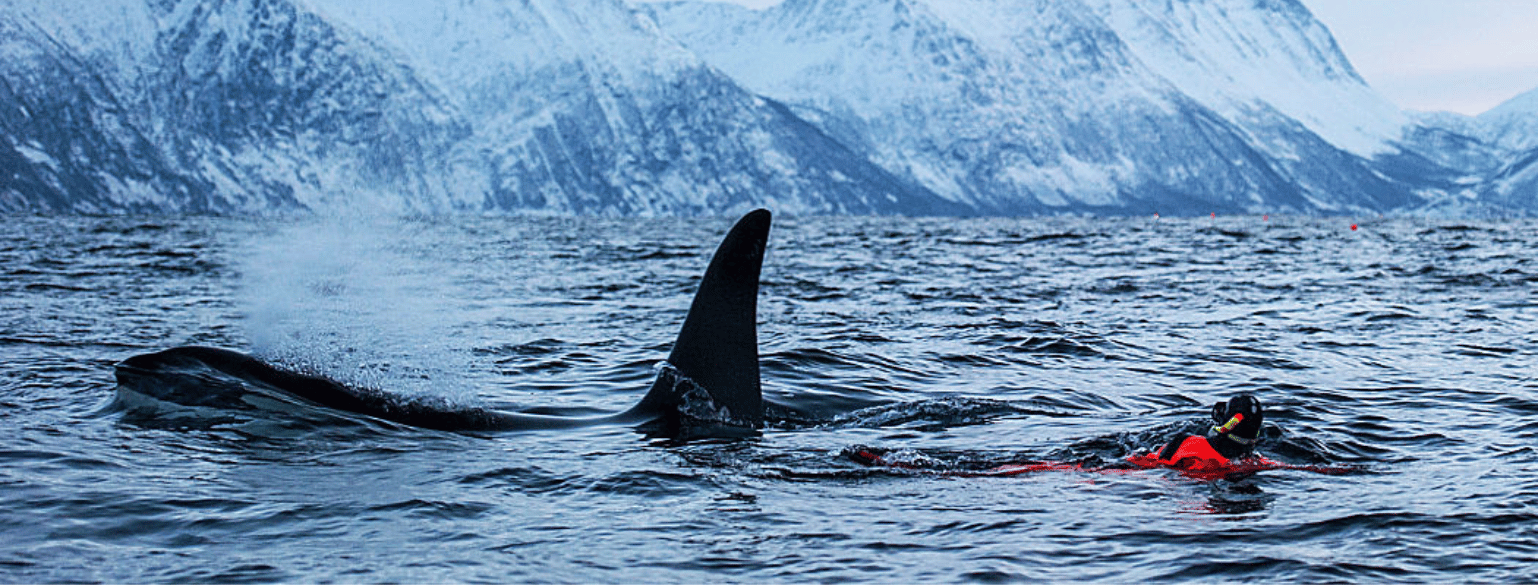
Orcas come to Northern Norway following herring. Every winter, billions of herring migrate into the fjords to spawn, and the orcas follow. Where the herring go, the orcas go.
Peak season runs from late October to mid-January. November is the sweet spot—strong orca presence with enough daylight to actually see them. By mid-December you're in polar night, meaning the sun doesn't rise. You get a few hours of twilight, but it's mostly dark. This makes spotting orcas harder and photography challenging.
The herring migration shifts year to year, which means the best orca locations change. What worked five years ago might not work now.
Currently, Alta and the Finnmark region are seeing the strongest orca activity. Herring have shifted north in recent seasons, bringing the orcas with them. Alta is less crowded than Tromsø and offers better access to current herring concentrations.
Tromsø and Skjervøy are the traditional orca destinations—more established infrastructure, more tour operators, easier to reach. You'll still see orcas here, but the main herring concentration has moved further north.
The Vesterålen Islands offer year-round whale watching (primarily sperm whales), with orcas appearing seasonally when herring bring them through. Less reliable for orcas specifically, but you're almost guaranteed to see some kind of whale.
Scientists and fishing boats track the herring migrations, but exact locations aren't predictable months in advance. Good tour operators adjust routes based on where the fish are.
You're not snorkeling in tropical water. You're in the Arctic, in winter, wearing a drysuit that keeps you dry while you float in 4-6°C water. You still feel the cold on your face and hands.
Boats take you where herring balls have been spotted. When conditions are right—orcas feeding calmly, not too many boats nearby—you slip into the water.
You float on the surface. The orcas hunt below you, using carousel feeding: they circle the herring, tighten the ball, then slap fish with their tails to stun them. It's coordinated, efficient, spectacular to watch.
Sometimes orcas surface near you. Sometimes they ignore you entirely. You're witnessing their hunt, not participating in it. Sessions vary—some last minutes, others longer depending on orca behavior and how cold you get. You'll likely enter the water multiple times as boats relocate to active feeding sites.
Weather impacts everything. Storms cancel trips. Snow reduces visibility. Arctic winter is unpredictable.
Daylight is limited. November gives you 4-6 hours of usable light. By December, it's down to twilight. Photography needs good equipment and low-light knowledge.
Orcas aren't guaranteed, though success rates are high during peak season. Nature doesn't follow schedules.
It's physically demanding. Getting in and out of drysuits, dealing with cold, spending hours on boats in Arctic conditions. You don't need to be an athlete, but basic fitness helps.
And yes, there are more people doing this now. More tour operators, more boats. You're rarely alone when orcas are found.
Some tours put you in the water with orcas. Others keep you on the boat.
Swimming gives you that intimate perspective. You hear their clicks underwater. You watch them move through the water column below you. It's the difference between watching wildlife and being immersed in their world.
Boat-based watching is less intense but still impressive. You see breaches, spy-hopping, feeding behavior. You stay warmer, watch longer, and photography is often easier.
Neither is better—it depends what you want and your comfort with cold water.
The herring attract more than orcas. Humpback whales and occasionally fin whales show up too. Many trips encounter multiple species.
And because you're in Northern Norway during winter, Northern Lights are possible on clear nights. Some operators specifically combine whale encounters with aurora chases—days on the water, nights watching the sky.
We're developing Northern Norway orca expeditions for the 2025-2026 season. Small groups, focus on in-water encounters, our usual approach of creating genuine connections rather than running tours.
Details are still being finalized. Locations depend on where herring concentrate that season, and we'll work with local guides who track movements and understand orca behavior.
This will be different from our tropical expeditions. Colder, darker, more demanding. But swimming with orcas in Arctic fjords is one of those experiences that changes you.
If swimming with orcas has been on your mind, November in Northern Norway gives you the best shot.
Accept that it's cold, dark, and unpredictable. Choose operators who respect wildlife and prioritize animal welfare over perfect customer experiences.
Understand that you're dealing with wild animals in a harsh environment. Some days deliver exactly what you hoped for. Some days don't. That's Arctic wildlife encounters.
At Maui, we believe the best travel stories start with the people you meet, not just the places you go. Join us, and become part of something bigger than just another trip.
📩 Questions? Reach out at info@mauitravel.io – we'd love to hear from you.
.png)


.svg)